
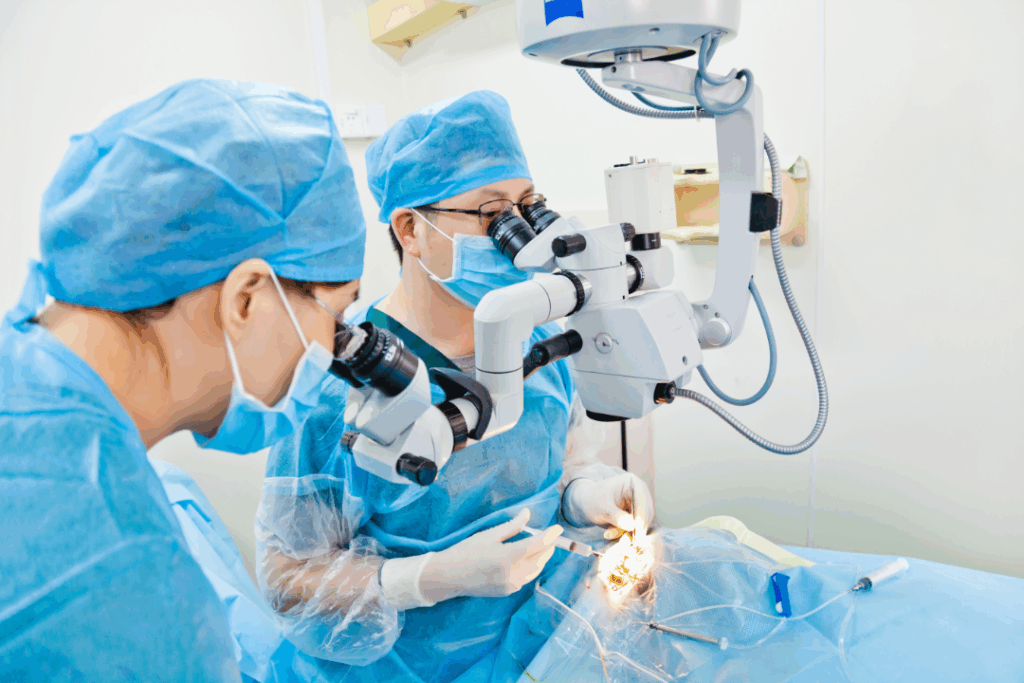
Choosing between SMILE vs. LASIK is one of the most significant decisions you will make for your eye health. As laser technology evolves, Australians now have access to multiple “generations” of vision correction, making it essential to understand which procedure aligns with your unique corneal anatomy and lifestyle.
While both procedures aim to eliminate the need for glasses or contact lenses, they utilize fundamentally different mechanical approaches. This comprehensive guide breaks down the technical nuances, recovery timelines, and suitability criteria to help you determine which laser eye surgery is truly better for your vision.
See more: Access a Bulk-Bill Sleep Study Hobart Now
What is SMILE and LASIK? Core Definitions
To understand the comparison, we must first define the mechanisms behind these two industry-leading procedures. Both fall under the category of refractive surgery, designed to reshape the cornea so light focuses precisely on the retina.
What is LASIK?
LASIK (Laser-Assisted In Situ Keratomileusis) is the “gold standard” of laser eye surgery, performed globally for over 25 years. It is a two-step procedure:
- The Flap: A femtosecond laser creates a thin, hinged flap on the surface of the cornea.
- The Reshaping: The surgeon lifts the flap and uses an excimer laser to coolly vaporise microscopic amounts of corneal tissue. The flap is then repositioned, acting as a natural bandage.
What is SMILE?
SMILE (Small Incision Lenticule Extraction) represents the third generation of laser vision correction. Unlike LASIK, it is a flapless, keyhole procedure:
- The Lenticule: A single femtosecond laser (often the ZEISS VisuMax) creates a tiny, disc-shaped piece of tissue (lenticule) within the intact cornea.
- The Extraction: The surgeon removes this lenticule through a microscopic incision (usually 2–4 mm). This change in corneal volume reshapes the eye without the need for a large surface flap.
SMILE vs. LASIK: Key Differences at a Glance
| Feature | LASIK | SMILE / SMILE Pro |
| Technique | Flap creation (20 mm incision) | Keyhole (2-4 mm incision) |
| Lasers Used | Two (Femtosecond + Excimer) | One (Femtosecond only) |
| Recovery Speed | Immediate (24 hours) | Rapid (24–48 hours) |
| Dry Eye Risk | Moderate (temporary) | Low |
| Treats Hyperopia? | Yes (Long-sightedness) | No (Myopia/Astigmatism only) |
| Corneal Stability | High | Superior (Flapless) |
In-Depth Comparison: How They Affect Your Vision
1. Visual Outcomes and Precision
In the Australian clinical landscape, both procedures boast a high success rate, with over 98% of patients achieving 20/20 vision or better. However, LASIK often has a slight edge in “visual sharpness” during the first 24 hours. Because LASIK can utilize topography-guided technology, it can map and treat microscopic irregularities (aberrations) in the eye’s surface more uniquely than standard SMILE.
2. The “Flap” Factor and Corneal Stability
The biggest technical differentiator is the corneal flap.
- LASIK involves a circular incision. While complications are rare, the flap remains a structural consideration.
- SMILE preserves the upper layers of the cornea. Because the “anterior stroma” remains largely untouched, the eye maintains better biomechanical strength. This makes SMILE a preferred choice for Australians involved in contact sports (like AFL or Rugby) or those in high-intensity occupations (Police, ADF, or Tradies) where a flap displacement is a theoretical risk.
3. Chronic Dry Eye Management
Post-operative dry eye is a common side effect of laser surgery. During LASIK, the flap incision severs more corneal nerves, which temporarily disrupts the feedback loop that tells your eye to produce tears. SMILE disrupts 80% fewer corneal nerves, significantly reducing the incidence and severity of post-surgical dryness.
The Recovery Process: What to Expect
The recovery timeline for SMILE vs. LASIK is remarkably fast, but the “quality” of vision in the first week differs.
LASIK Recovery Framework:
- Hour 1–6: Mild grittiness or burning; eyes may water.
- Day 1: Most patients wake up with “HD vision” and can drive to their follow-up appointment.
- Week 1: Stable vision; use of lubricating drops is essential.
SMILE Recovery Framework:
- Hour 1–6: Minimal discomfort due to the smaller incision.
- Day 1–3: Vision is functional (most return to work), but may feel slightly “misty” or “soft” as the keyhole incision heals.
- Week 1–2: Vision stabilizes to match or exceed LASIK results.
Benefits and Outcomes
Why Choose LASIK?
- Versatility: It is the only option for hyperopia (long-sightedness).
- Track Record: Decades of data and refined “all-laser” techniques.
- Immediate Gratification: The “Wow” factor of instant clarity the next morning.
Why Choose SMILE?
- Safety for Active Lifestyles: No risk of flap complications from physical trauma.
- Comfort: Ideal for those with borderline dry eyes or sensitivity.
- Minimally Invasive: Smaller physical footprint on the eye.
Common Mistakes and Eligibility Pitfalls
One of the most common mistakes patients make is assuming they can “pick” their surgery based on online reviews. In reality, your corneal thickness and prescription type dictate your eligibility.
- The “Thick Cornea” Rule: LASIK requires a certain corneal thickness to safely create a flap and reshape the tissue. If your corneas are naturally thin, a surgeon may recommend SMILE or PRK instead.
- The Hyperopia Trap: If you are long-sighted, SMILE is currently not a clinical option in Australia. You will be directed toward LASIK or a lens-based procedure.
- Pregnancy and Stability: Hormonal changes can alter your prescription. Australians are advised to wait at least 3–6 months post-breastfeeding before undergoing any laser eye surgery.
FAQ: Frequently Asked Questions
Is SMILE more expensive than LASIK in Australia?
Generally, yes. SMILE and the newer SMILE Pro often carry a higher price point (typically $3,200–$4,500 per eye) compared to LASIK ($2,800–$3,800 per eye) due to the advanced single-laser technology and licensing.
Can I get SMILE if I have astigmatism?
Yes. Modern SMILE technology effectively treats myopic astigmatism. Your surgeon will confirm if your specific degree of astigmatism falls within the treatable range during your mapping consultation.
Which procedure is safer?
Both are considered extremely safe with complication rates below 1%. The “safety” profile often depends on your lifestyle; SMILE is safer for those at risk of eye trauma, while LASIK is safer for those requiring highly customized topography-guided correction.
How long do the results last?
Laser eye surgery is permanent. However, it does not prevent age-related changes like presbyopia (the need for reading glasses), which typically begins in your mid-40s.
Does laser eye surgery hurt?
No. Numbing drops are used for both SMILE and LASIK. You may feel a slight pressure sensation for 20–30 seconds during the laser application, but the actual procedure is painless.
Conclusion: Making the Right Choice for Your Vision
When comparing SMILE vs. LASIK: Which laser eye surgery is better for your vision?, the answer is rarely universal.
If you are a professional athlete, suffer from dry eyes, or have thin corneas, SMILE offers a modern, flapless advantage that prioritizes corneal integrity. Conversely, if you are long-sighted or demand the absolute sharpest visual recovery within 24 hours, LASIK remains the world-leading choice for a reason.
The most critical next step is a comprehensive diagnostic assessment with a qualified Australian ophthalmologist. They will use 3D corneal mapping to determine which “generation” of laser surgery will provide you with the safest, clearest outcome.
Internal Linking Suggestions:
- laser eye surgery cost Australia
- SMILE Pro vs SMILE differences
- long-sightedness treatment options
Authoritative References:
- The Royal Australian and New Zealand College of Ophthalmologists (RANZCO)
- Therapeutic Goods Administration (TGA) – Ophthalmic Laser Guidelines